
Home > News > Company News
The 2025 Shanghai International Food Processing and Packaging Machinery Exhibition (ProPak China & FoodPack China) will be held from June 24 to June 26, 2025, at the National Exhibition and Convention Center (Shanghai). As one of the most influential professional exhibitions for food processing and packaging technology in Asia, the event is expected to attract a wide range of global participants, including equipment manufacturers, food producers, system integrators, and industry experts.
Under the theme “Digital Intelligence, Industrial Innovation,” this year’s exhibition reflects the accelerating transformation of the food manufacturing industry toward smarter, more efficient, and more sustainable production models. With increasing pressure on food companies to improve productivity, ensure product safety, and meet environmental standards, ProPak China & FoodPack China 2025 serves as a timely platform for showcasing advanced technologies and practical solutions across the food value chain.
Covering more than 200,000 square meters, the exhibition will integrate food processing equipment, packaging machinery, food ingredients, and health & nutrition solutions, creating a comprehensive trade environment that connects upstream and downstream sectors of the food industry.
As global food consumption continues to evolve, manufacturers are facing growing demands for higher output, consistent quality, and enhanced traceability. Digital intelligence has emerged as a key enabler in addressing these challenges.
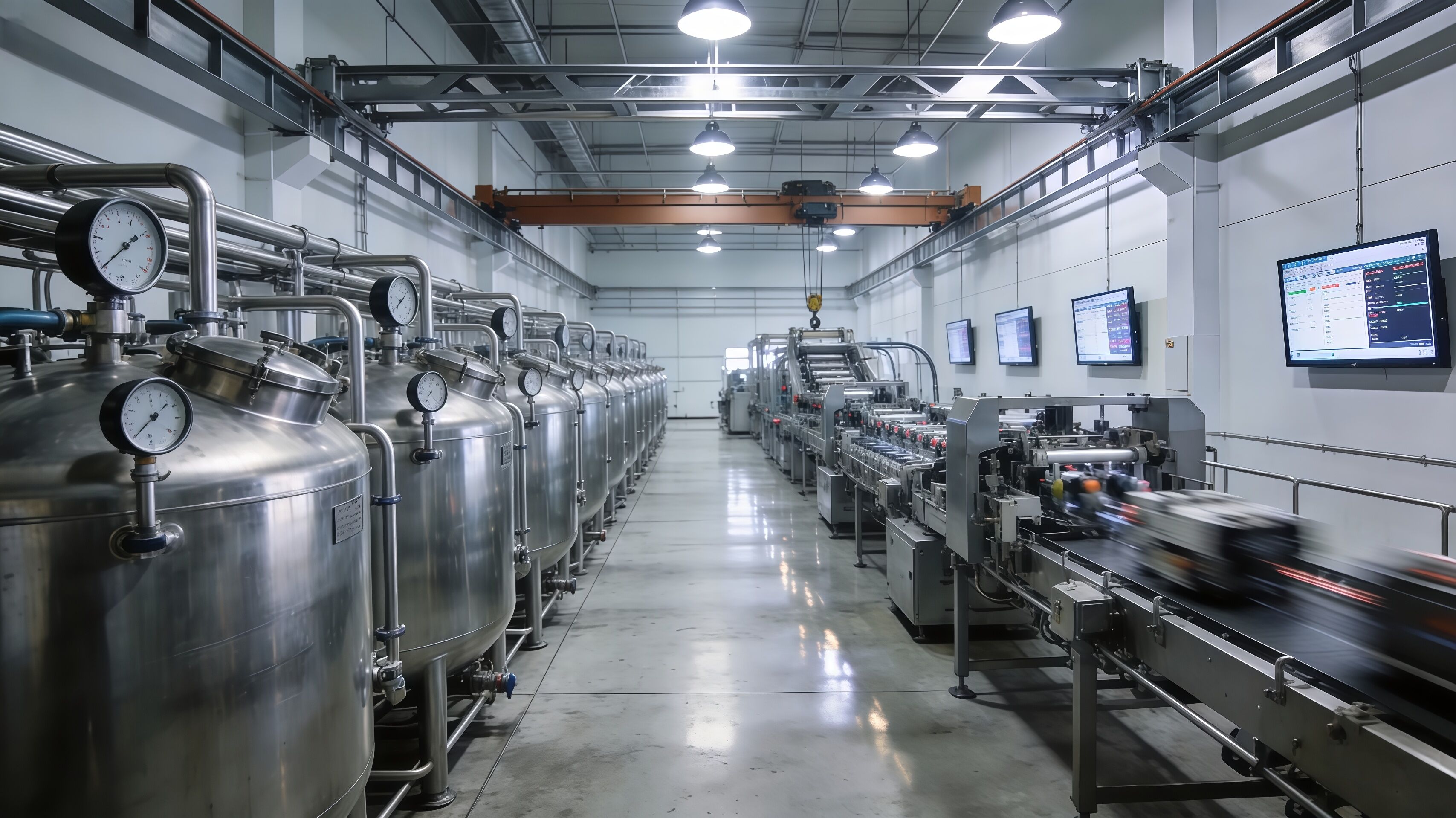
In sectors such as dairy, juice beverages, ice cream, sauces, and functional drinks, intelligent processing systems are increasingly being adopted to optimize production workflows. Automated control of critical parameters—such as temperature, pressure, and flow rate—helps stabilize processing conditions while reducing reliance on manual operation. This not only improves production efficiency but also minimizes human error and operational risk.
At ProPak China & FoodPack China 2025, visitors will gain insights into how smart manufacturing technologies are reshaping modern food factories, enabling producers to respond more quickly to market changes while maintaining high standards of hygiene and safety.
Sustainability has become a strategic priority rather than a long-term aspiration for the food industry. The exhibition highlights practical approaches to reducing energy consumption, water usage, and overall environmental impact through improved equipment design and process optimization.
Energy-efficient heat transfer solutions, optimized sterilization processes, and well-designed cleaning systems all play an essential role in supporting sustainable food manufacturing. In dairy and beverage processing in particular, efficient thermal systems help reduce operating costs while ensuring food safety and product stability.
By adopting advanced processing technologies and intelligent system integration, food manufacturers are increasingly able to balance economic performance with environmental responsibility—an approach strongly reflected in the technical focus of ProPak China & FoodPack China 2025.
In today’s competitive market, stable and scalable food production depends not only on individual machines but on how well the entire processing system is designed and integrated. More manufacturers are shifting toward system-level planning that considers process flow, automation compatibility, and future expansion from the early stages of a project.
In applications such as milk, juice beverages, ice cream, yogurt, and sauces, careful coordination between sterilization, homogenization, mixing, heat exchange, and auxiliary systems is essential. A well-matched processing line can help manufacturers achieve continuous operation, consistent product quality, and improved overall efficiency.
This system-oriented approach has become particularly important for companies targeting large-scale production or export markets, where stability, repeatability, and compliance with international standards are critical.
Modern food processing facilities rely on a combination of specialized equipment working together to achieve safe and efficient production. For example:
Efficient heat exchange systems support precise thermal control across a wide range of products and viscosities. Pasteurization and UHT processing solutions provide reliable microbial safety and extended shelf life for liquid foods. High pressure homogenization improves product texture, stability, and sensory characteristics, especially in dairy and beverage applications.
Vacuum degassing systems contribute to better product appearance and consistency, while hygienic mixing tanks and storage vessels ensure accurate formulation and smooth production flow. When these units are integrated through automated control systems, manufacturers benefit from higher operational transparency and reduced downtime.
As food companies expand into international markets, processing solutions must adapt to different regulatory requirements, raw material characteristics, and production environments. Equipment and systems that have been proven across diverse regions offer a clear advantage.
Through long-term involvement in global food processing projects, processing lines and core equipment have been successfully applied in a wide variety of markets, including North America, South America, Europe, Asia-Pacific, and the Middle East. This international exposure contributes to more robust engineering practices and practical solutions that perform reliably under different operating conditions.
Consistent quality control and adherence to recognized management systems further support long-term operational stability and lower maintenance costs for end users.
As the concept of smart factories becomes more widely adopted, the expectations placed on processing solutions continue to rise. Manufacturers are looking for systems that not only meet current production needs but are also adaptable to future automation upgrades and capacity expansion.
By focusing on process optimization, automation readiness, and energy efficiency, integrated processing solutions help food producers achieve sustainable growth. This aligns closely with the vision presented at ProPak China & FoodPack China 2025, where digital intelligence and industrial innovation are positioned as key pillars of future development.
ProPak China & FoodPack China 2025 provides a forward-looking view of how intelligent processing technologies and sustainable engineering practices are shaping the next stage of food manufacturing. For companies planning new facilities or upgrading existing production lines, the exhibition offers valuable insight into emerging trends and proven technical approaches.
As the food industry continues to evolve, solutions that combine solid process understanding, reliable equipment performance, and system integration capabilities will play an increasingly important role. Events such as ProPak China & FoodPack China 2025 highlight not only technological progress but also the growing importance of long-term, efficiency-driven manufacturing strategies.
For food producers seeking to enhance competitiveness, improve operational efficiency, and prepare for future market demands, the developments showcased at this exhibition point toward a more intelligent, sustainable, and resilient manufacturing landscape.

We possess unique expertise in the design and process technology of production line equipment for milk, juice beverages, ice cream, yogurt, ketchup, and beer. With extensive experience in complete production lines, we offer turnkey solutions for entire production lines at various speeds.
No 1555, Xiaonan Rd, Nanqiao Town, Fengxian District, Shanghai City, China
Copyright © Shanghai Changlong Industrial Equipment Co.,Ltd. All Rights Reserved Privacy Policy
 EN
EN